
Best Scopes for Air Arms Air Rifles are essential upgrades for anyone looking to get the most accuracy, consistency, and performance from their rifle. Because Air Arms air rifles are known for their precision and quality, pairing them with the right optic is key to unlocking their full potential. The ideal scope should be tailored to airgun-specific distances, offer clear and reliable optics, and provide features that support both hunting and target shooting. With the right combination of magnification, parallax control, and durability, a quality scope can significantly improve shot placement and overall shooting confidence in a wide range of conditions.
Best Scopes for Air Arms Air Rifles
1.Athlon Optics Argos BTR GEN2 1-8×24 Riflescope – ATSR5 SFP IR BDC, Black
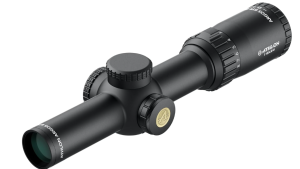
The Athlon Optics Argos BTR GEN2 1–8×24 (ATSR5 SFP IR BDC) is a compact, versatile riflescope that fits especially well on Air Arms air rifles, particularly PCP models like the S510 where fast target acquisition and mid-range flexibility matter. Its 1–8x magnification range makes it unusually adaptable for an air rifle optic: you can shoot with both-eyes-open speed at 1x for close targets, then dial up to 8x for precise pellet placement at longer airgun distances.
One of the strongest advantages of this scope is its fully multicoated lenses, which significantly improve light transmission. In practical use, this means a brighter, clearer image during typical airgun shooting conditions especially at dawn or dusk when many airgun hunters are active. The illuminated reticle further enhances usability in low light, helping the shooter maintain a clear aiming point without the reticle disappearing against darker backgrounds. Combined with the etched glass reticle design, the scope gains excellent durability and recoil resistance, which is important even for air rifles that produce sharp spring recoil or repeated PCP firing cycles.
The second focal plane (SFP) design keeps the reticle size consistent across all magnification levels. For air rifle shooters, this is especially useful because your aiming reference doesn’t visually shrink or grow as you zoom, making holdovers more predictable once you’ve learned your setup. Meanwhile, the 0.5 MOA click adjustments and 100 MOA total adjustment range allow for precise tuning—important for dialing in pellet trajectories at varying distances. While the 100-yard fixed parallax is more common in tactical-style optics, it still works adequately for many air rifle setups that operate inside 10–50 yards, though it may not be as flexible as an adjustable AO scope at very close ranges.
Specifications
- Magnification: 1–8x
- Objective Lens: 24 mm
- Reticle: ATSR5 SFP IR BDC (etched glass, illuminated)
- Click Value: 0.5 MOA
- Total Elevation/Windage Adjustment: 100 MOA
- Parallax: Fixed at 100 yards
- Focal Plane: Second Focal Plane (SFP)
- Lens Coating: Fully Multicoated
- Illumination: Yes
- Sport Type: Hunting
- Included: Instruction Manual
Pros
- Very versatile 1–8x magnification range (fast + precise use)
- Bright, high-contrast image due to fully multicoated lenses
- Durable etched-glass reticle with strong recoil resistance
- Illuminated reticle improves low-light performance
- Consistent reticle size (SFP) simplifies aiming
- Wide adjustment range (100 MOA total)
- Compact and well-suited to lightweight Air Arms setups
Cons
- Fixed 100-yard parallax is not ideal for close-range air rifle precision work
2.Vortex Optics Crossfire II Second Focal Plane, 1-inch Tube Riflescopes
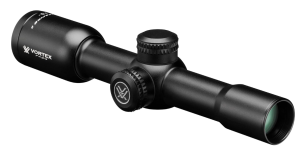
The Vortex Optics Crossfire II Second Focal Plane 1-inch Tube Riflescope is a rugged, no-nonsense optic that performs surprisingly well when paired with Air Arms air rifles, especially PCP models like the S510 or more traditional hunting setups where simplicity, reliability, and optical clarity matter more than advanced tactical features. While it is often used on centerfire and muzzleloaders, its durability and clean optical system also make it a strong option for airgun shooters who want a dependable “set it and forget it” scope.
One of its standout characteristics is the 1x (no magnification) configuration option in the Crossfire II line, designed to comply with muzzleloader-style regulations while still delivering a crystal-clear, ultra-bright sight picture. For air rifle use, this translates into extremely fast target acquisition at close ranges, making it especially useful for pest control or reactive shooting where speed is more important than zoom. The fully multi-coated lenses enhance light transmission, giving the shooter a bright and usable image even in early morning or low-light conditions—common environments for airgun use.
Comfort and usability are also strong points. The scope offers 3.8 inches of eye relief, which is generous enough to allow comfortable positioning on springer and PCP Air Arms rifles without feeling cramped. Combined with a 95-foot field of view at 100 yards, it gives shooters excellent situational awareness. The V-Plex reticle is simple, clean, and uncluttered, making it ideal for air rifle users who prefer straightforward aiming without overly complex holdover grids. The fast-focus eyepiece further improves usability by allowing quick reticle sharpening, which is helpful when switching between different lighting conditions or distances.
Durability is where the Crossfire II truly earns its reputation. The scope is built from a single-piece aircraft-grade aluminum tube, making it highly resistant to recoil and impact—an important feature even for air rifles that produce sharp spring recoil impulses. It is O-ring sealed and nitrogen purged, ensuring complete waterproof and fogproof performance. The capped reset turrets are finger-adjustable with precise MOA clicks, and they can be reset to zero after sighting in, making field adjustments simple and reliable.
Backed by Vortex’s unlimited, unconditional lifetime VIP Warranty, the Crossfire II stands out as a long-term investment. For Air Arms owners who want a tough, straightforward optic that prioritizes clarity, durability, and ease of use over tactical complexity, this scope delivers consistent performance without unnecessary complications.
Specifications
- Tube Diameter: 1 inch
- Reticle: V-Plex (Second Focal Plane)
- Optical System: Fully Multi-Coated
- Eye Relief: 3.8 inches
- Field of View: 95 ft at 100 yards
- Turrets: Capped, resettable MOA clicks
- Adjustment System: Finger adjustable, MOA-based
- Construction: Single-piece aircraft-grade aluminum
- Waterproofing: O-ring sealed
- Fogproofing: Nitrogen purged
- Warranty: VIP Lifetime Warranty (unconditional, transferable)
- Intended Use: Hunting / general shooting (including muzzleloader compliance use cases)
Pros
- Extremely durable aircraft-grade aluminum construction
- Clear, bright optics with fully multi-coated lenses
- Simple V-Plex reticle is easy to use for air rifle shooting
- Generous eye relief (comfortable on springers and PCPs)
- Wide field of view for fast target acquisition
- Waterproof, fogproof, and shockproof design
- Capped turrets prevent accidental adjustments
- Outstanding lifetime VIP warranty coverage
Cons
- No magnification adjustment limits long-range precision compared to variable scopes
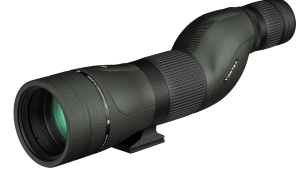
3.Vortex Optics Diamondback HD Spotting Scopes
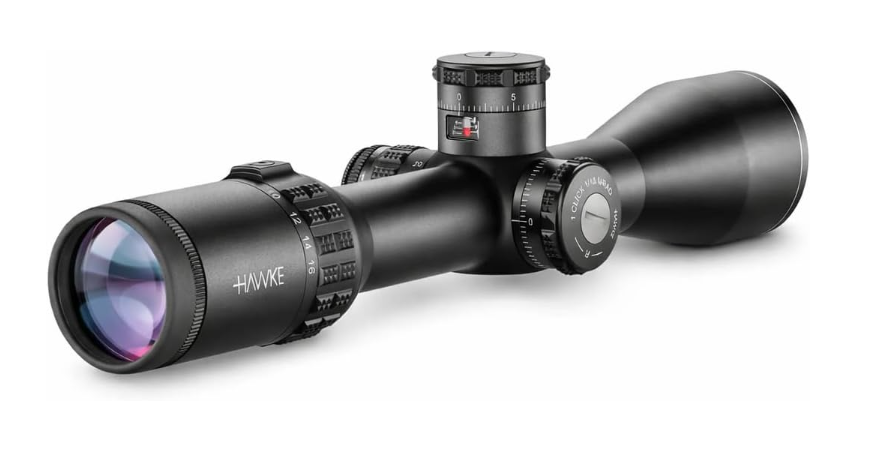
4.Sidewinder 30 Riflescope 4-16X50 SR Pro Gen II
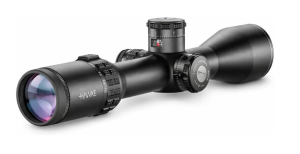
The Hawke Sidewinder 30 SF 4–16×50 SR Pro Gen II is a high-performance riflescope that fits extremely well on Air Arms air rifles, especially precision PCP models like the S510, FTP 900, and other setups where consistent long-range accuracy is the priority. It sits firmly in the “serious shooter” category, offering features that bridge field target precision, hunting flexibility, and benchrest-level refinement.
At the heart of this scope is its high-grade, low-dispersion crown glass combined with 18-layer fully multi-coated lenses, delivering excellent clarity and light transmission. For air rifle shooters, this translates into a crisp, high-contrast image that makes small targets easier to identify at distance especially useful when shooting pellets at 25 to 75+ yards where impact visibility matters. The 50 mm objective lens further enhances brightness, giving a clear advantage in low-light conditions often encountered during early morning or late evening shooting sessions.
One of the standout features is the side focus system, which adjusts from 10 yards to infinity, making it especially well-suited for air rifles. This close-focus capability is critical for airgun use, allowing precise parallax correction at typical shooting distances. The inclusion of a removable 4-inch sidewheel with index-matched rangefinding capability adds a level of precision control that field target and precision shooters will particularly appreciate, enabling fine tuning of focus without losing shooting position.
The SR Pro II illuminated etched glass reticle is designed for versatility and visibility. With a multi-LED high-intensity red illumination system, the reticle remains visible in varying light conditions, from bright daylight to shaded woodland environments. Being a second focal plane (SFP) design, the reticle maintains a consistent size throughout magnification changes, which makes holdovers more predictable once the scope is zeroed. The 8x zoom range (4–16x) provides a flexible balance between field-of-view awareness and precision aiming.
Durability and tracking reliability are equally strong points. The scope features a 30 mm mono-tube chassis, making it highly resistant to shock and recoil important even for spring-powered Air Arms rifles. It is shockproof, waterproof, and fog proof, and rated for all calibers, meaning it easily handles both PCP and springer recoil characteristics.
Specifications
- Magnification: 4–16×
- Objective Lens: 50 mm
- Tube Diameter: 30 mm mono-tube
- Reticle: SR Pro II IR etched glass, illuminated (multi-LED red)
- Focal Plane: Second Focal Plane (SFP)
- Turrets: Resettable locking turrets with witness window
- Click Value: 1/10 MRAD
- Side Focus: 10 yards to infinity
- Sidewheel: 4″ removable, rangefinding compatible
- Glass: High-grade low dispersion crown glass
- Lens Coating: 18-layer fully multi-coated
- Construction: Shockproof, waterproof, fog proof
- Rating: All caliber rated
Pros
- Excellent clarity with low-dispersion crown glass
- Strong light transmission (18-layer multi-coated optics)
- Side focus down to 10 yards ideal for air rifles
- Precise 1/10 MRAD locking turrets with reset capability
- Durable 30mm mono-tube construction
- Illuminated etched reticle for low-light shooting
- Wide 4–16x magnification range suitable for varied airgun use
- Excellent tracking reliability for dialing shots
- Fully weatherproof and shockproof design
Cons
- Heavier than entry-level air rifle scopes
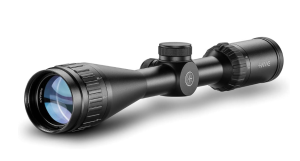
5.Hawke Airmax Airgun Scope 1″
Also read;5 Best Yong Heng PCP Compressor Oil
Factor to Consider when Choosing Best Scopes for Air Arms Air Rifles
1. Parallax Adjustment and Close-Focus Capability
One of the most important factors for Air Arms air rifles is how close the scope can properly focus. Air rifles are typically used at shorter ranges than centerfire rifles, often between 10 and 50 yards, so a scope that cannot adjust parallax at these distances will struggle with accuracy. Adjustable objective (AO) or side focus systems are especially valuable because they allow the shooter to remove aiming errors caused by parallax shift. A fixed-parallax scope designed for 100 yards may still work in some cases, but it is generally less precise for airgun shooting where small deviations in pellet impact matter a lot.
2. Magnification Range and Versatility
The ideal magnification depends heavily on how the rifle will be used. Lower ranges like 1–4x or 3–9x are excellent for hunting and quick target acquisition, while higher ranges like 4–16x or 6–24x are better for precision shooting and field target competitions. Many Air Arms shooters prefer variable magnification scopes because they offer flexibility for both close and mid-range shooting. A wide zoom range, such as 1–8x or 4–16x, allows the shooter to adapt quickly without needing to change equipment.
3. Optical Quality and Lens Coatings
Clear optics are essential for air rifle shooting because targets are often small and shot placement must be very precise. High-quality glass with multi-coated or fully multi-coated lenses improves light transmission and reduces glare, resulting in a brighter and sharper image. Better optical systems also reduce chromatic aberration, which helps maintain edge clarity when focusing on small targets like pellets holes or kill zones. In low-light conditions, such as early morning pest control, strong optical quality can make a significant difference in visibility.
4. Reticle Type and Usability
The reticle plays a major role in how effectively a shooter can aim and compensate for distance. Simple reticles like duplex or V-Plex designs are easy to use and good for beginners or hunting scenarios. More advanced etched or illuminated reticles, such as MRAD or BDC styles, provide additional aiming references for holdovers and wind compensation. For Air Arms rifles, etched glass reticles are especially valuable because they are more durable and can withstand recoil better than wire reticles.
5. Durability and Recoil Resistance
Even though air rifles are not as powerful as centerfire firearms, spring-powered Air Arms models generate a unique forward-and-back recoil that can damage poorly built optics. A good scope should be shockproof, fog proof, and waterproof, with a solid internal construction such as a mono-tube chassis. Scopes with etched glass reticles and reinforced housings are better suited for long-term use on air rifles, ensuring they maintain zero and reliability over time.
6. Turret Precision and Tracking Reliability
Accurate turret adjustments are essential for shooters who dial in distance changes rather than relying solely on holdovers. MOA or MRAD-based turrets should offer consistent, repeatable clicks so that adjustments match actual point-of-impact changes. Features like resettable turrets or locking mechanisms add convenience and prevent accidental movement in the field. For Air Arms rifles used in precision shooting, reliable tracking is critical for consistent performance at varying distances.
7. Field of View and Eye Relief
Field of view affects how easily a shooter can locate and track targets, especially at lower magnifications. A wider field of view is helpful for hunting or reactive shooting, where targets may move quickly. Eye relief is equally important for comfort and safety, particularly on spring-powered rifles that may require slightly different head positioning. Adequate eye relief ensures the shooter maintains a full sight picture without strain and reduces the risk of scope bite on heavier recoiling setups.
8. Build Quality and Long-Term Reliability
A good air rifle scope should be built to last, especially if it is mounted on a high-quality Air Arms rifle intended for long-term use. Features such as single-piece aluminum tubes, nitrogen or argon purging, and protective coatings all contribute to durability in changing weather conditions. Additional design elements like rubber armor, capped turrets, and sealed internals help protect the scope during transport and field use. A strong warranty is also an indicator of manufacturer confidence and long-term reliability.
Frequent Asked Question Best Scopes for Air Arms Air Rifles
1. What magnification is best for Air Arms air rifles?
The best magnification depends on how you use your Air Arms rifle. For close-range shooting and hunting (around 10–40 yards), a 3–9x or 1–8x scope is usually ideal because it offers a wide field of view and quick target acquisition. For precision shooting or field target competitions, higher magnification like 4–16x or 6–24x provides better detail and accuracy at longer distances. Most shooters find a variable zoom scope the most practical because it allows flexibility across different shooting situations.
2. Do I need an airgun-specific scope for an Air Arms rifle?
While not absolutely required, an airgun-specific scope is highly recommended—especially for spring-powered Air Arms models like the TX200 or Pro Sport. Air rifles produce a unique two-way recoil that can damage standard rifle scopes over time if they are not built for it. Airgun-rated scopes often include reinforced internals, etched glass reticles, and better parallax adjustment for close ranges. PCP Air Arms rifles are less demanding on optics, but airgun-specific features still improve accuracy and usability.
3. Is adjustable objective (AO) or side focus important for air rifles?
Yes, adjustable focus is one of the most important features for air rifle scopes. Since airguns are typically used at shorter distances than centerfire rifles, parallax error can significantly affect accuracy if the scope is not properly adjusted. AO or side focus systems allow the shooter to fine-tune clarity and eliminate parallax at different ranges, improving shot precision. For Air Arms rifles used in target shooting or hunting, this feature is highly recommended for consistent and reliable performance.
Conclusion
Choosing thebest scope for air arms air rifle comes down to balancing clarity, precision, and suitability for the short to mid-range distances where airguns are typically used. A well-matched optic should offer reliable parallax adjustment, durable construction that can handle air rifle recoil characteristics, and clear glass that performs well in varying light conditions. Equally important is selecting a reticle and magnification range that supports your shooting style, whether that’s fast target acquisition in the field or careful precision work at longer distances. When these factors come together, the result is a setup that feels consistent, accurate, and responsive, allowing the shooter to get the most out of the rifle’s capabilities.